Light, airy, and irresistibly elegant, meringue is one of those classic creations that can completely transform your cooking and baking. From crisp pavlovas to silky pie toppings, mastering a great meringue recipe opens the door to endless dessert possibilities. If you’ve ever wondered how bakers achieve that glossy, cloud-like perfection, you’re in the right place.
In this guide, you’ll learn exactly how to make meringue successfully, understand the different types, avoid common mistakes, and discover practical tips that work for home cooks across the United States, United Kingdom, and Canada.
What Is Meringue?
Meringue is a sweet, airy mixture made by whipping egg whites with sugar until stiff peaks form. The magic lies in incorporating air into the egg whites, creating a structure that can be baked, torched, or folded into other desserts.
Why Meringue Is a Game-Changer in the Kitchen
Adds volume and lightness to desserts
Requires simple ingredients
Looks impressive with minimal effort
Works in countless recipes
Once you master a basic meringue recipe, your desserts instantly feel bakery-quality.
Types of Meringue You Should Know
Understanding the three main types of meringue helps you choose the right method for your recipe.
French Meringue
Easiest and most common
Made by whipping raw egg whites with sugar
Best for baked meringues and cookies
Swiss Meringue
Egg whites and sugar gently heated, then whipped
Smooth, glossy, and stable
Ideal for buttercream and pie toppings
Italian Meringue
Hot sugar syrup whipped into egg whites
Most stable and luxurious
Perfect for frostings and mousse
Each variation transforms your cooking in its own way.
Essential Ingredients for a Perfect Meringue Recipe
You only need a few ingredients, but quality matters.
Core Ingredients
Egg whites (room temperature)
Granulated or superfine sugar
Pinch of salt or cream of tartar (stabilizer)
Optional Flavor Enhancers
Vanilla extract
Almond extract
Citrus zest
💡 Tip: Fresh, clean egg whites whip best—avoid any trace of yolk.
Step-by-Step Classic Meringue Recipe
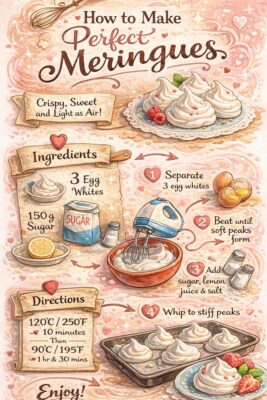
This simple French-style meringue is perfect for beginners.
Step 1: Prepare Your Equipment
Use a clean, dry glass or metal bowl
Avoid plastic bowls (they can hold grease)
Even a small amount of grease can prevent egg whites from whipping properly.
Step 2: Whip the Egg Whites
Beat egg whites on medium speed until soft peaks form
Add a pinch of salt or cream of tartar
Soft peaks should gently curl when the whisk is lifted.
Step 3: Add Sugar Gradually
Add sugar one tablespoon at a time
Continue beating until stiff, glossy peaks form
The meringue should look smooth, shiny, and hold its shape.
Step 4: Bake or Use as Needed
Pipe or spoon onto a baking tray
Bake at low temperature (200–225°F / 95–110°C)
Allow to cool completely
Low heat dries the meringue without browning it.
Practical Tips to Transform Your Meringue Every Time
Use room-temperature egg whites
Add sugar slowly for smooth texture
Avoid humid days when possible
Do not overbeat (grainy texture means it’s gone too far)
Use superfine sugar for quicker dissolving
These tips help you truly transform your cooking with this meringue recipe.
Common Meringue Mistakes to Avoid
Even experienced cooks can struggle with meringue. Avoid these pitfalls:
Using greasy or wet bowls
Adding sugar too quickly
Baking at high temperatures
Opening the oven door too often
Using cold egg whites
Correcting these mistakes leads to consistently perfect results.
Creative Ways to Use Meringue
Once you master the recipe, the possibilities are endless.
Classic Desserts
Lemon meringue pie
Pavlova
Baked meringue cookies
Modern Twists
Meringue nests with berries
Swirled meringue toppings
Torch-finished meringue for dramatic presentation
Folding Meringue into Recipes
Soufflés
Mousses
Light sponge cakes
Meringue instantly elevates both flavor and texture.
How to Store and Serve Meringue
Storage Tips
Store baked meringues in an airtight container
Keep away from humidity
Consume within 2–3 days for best texture
Serving Suggestions
Pair with fresh fruit and whipped cream
Drizzle with chocolate or caramel
Serve as a crisp contrast to creamy desserts
Health and Nutrition Notes
Meringue is:
Naturally gluten-free
Low in fat
High in protein from egg whites
While still a sweet treat, it’s lighter than many traditional desserts.
Why This Meringue Recipe Transforms Your Cooking
Mastering a meringue recipe improves your:
Baking confidence
Presentation skills
Understanding of dessert structure
From casual home baking to special occasions, meringue adds elegance without complexity.
Frequently Asked Questions About Meringue
Can I Make Meringue Without Sugar?
Sugar is essential for structure and stability, but alternatives like powdered erythritol can work with careful technique.
Why Is My Meringue Weeping?
Weeping happens due to excess moisture, underbaking, or humidity.
Can I Use a Hand Mixer?
Yes—hand mixers work well, though stand mixers make the process easier.
Conclusion
If you’re ready to elevate your desserts, it’s time to transform your cooking with this meringue recipe recipe. With just a few ingredients and the right technique, you can create light, elegant, and impressive desserts that rival any bakery creation.
Whether you’re topping a pie, baking crisp meringue kisses, or crafting a show-stopping pavlova, mastering meringue is a skill every home cook should have. Start whipping today—and watch your desserts rise to a whole new level.