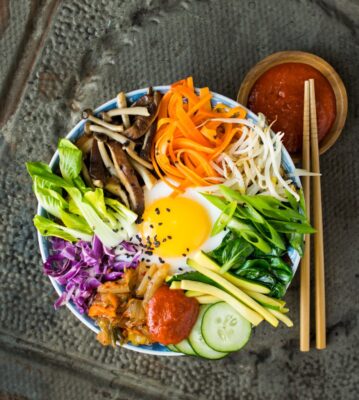
If you’ve ever walked into a Korean restaurant, chances are you’ve spotted bibimbap on the menu—a vibrant bowl of rice topped with colorful vegetables, savory meat, a fried egg, and spicy gochujang sauce. Bibimbap is not only a feast for the eyes but also a dish packed with flavors, textures, and nutrition.
But what exactly makes bibimbap recipe so special, and what’s the secret to creating it perfectly at home? Let’s dive in.
🥘 What Is Bibimbap?
The word bibimbap (비빔밥) literally translates to “mixed rice.” It’s a traditional Korean dish where warm rice is served with an assortment of seasoned vegetables (namul), sliced meat (often beef), and topped with an egg. The magic happens when you mix everything together with a generous spoonful of gochujang (Korean chili paste).
🌟 Why Everyone Loves Bibimbap
Balanced nutrition – A perfect mix of carbs, protein, fiber, and healthy fats.
Customizable – You can swap vegetables, protein, or spice level based on preference.
Beautiful presentation – The rainbow of toppings makes it visually stunning.
Comfort food with a kick – Warm rice, savory meat, and spicy sauce satisfy every craving.
🥣 Essential Ingredients for Bibimbap Recipe
For the rice:
2 cups short-grain white rice (or brown rice for a healthier option)
For the toppings:
200g beef (ribeye or ground beef), thinly sliced
1 carrot, julienned
1 zucchini, julienned
1 cup spinach, blanched
1 cup bean sprouts, blanched
4 shiitake mushrooms, sliced
1 fried egg (sunny-side-up, per serving)
Sesame oil & sesame seeds (for garnish)
For the beef marinade:
2 tbsp soy sauce
1 tbsp sesame oil
1 clove garlic, minced
1 tsp sugar
Pinch of black pepper
For the gochujang sauce:
2 tbsp gochujang (Korean chili paste)
1 tbsp sesame oil
1 tbsp sugar or honey
1 tbsp water
1 tsp rice vinegar
1 tsp sesame seeds
👩🍳 Step-by-Step Instructions
Step 1: Prepare the Rice
Cook rice until fluffy. Keep warm while preparing toppings.
Step 2: Cook the Vegetables
Carrots & zucchini: Lightly stir-fry in sesame oil until just tender.
Spinach & bean sprouts: Blanch, drain well, and season with a pinch of salt and sesame oil.
Mushrooms: Sauté with a splash of soy sauce until fragrant.
Step 3: Marinate and Cook the Beef
Mix beef with marinade ingredients. Stir-fry quickly until fully cooked.
Step 4: Make the Sauce
Whisk together all gochujang sauce ingredients until smooth. Adjust sweetness or spice as desired.
Step 5: Assemble the Bibimbap
Place warm rice in a bowl.
Arrange vegetables and beef neatly on top (like a rainbow).
Add a fried egg in the center.
Drizzle with sesame oil and sprinkle sesame seeds.
Serve with gochujang sauce on the side (or directly on top).
💡 Secrets to Perfect Bibimbap
Balance the colors – Use at least five different vegetables for an authentic, eye-catching look.
Don’t overcook veggies – Keep them crisp and fresh.
Use sesame oil generously – It enhances the nutty aroma.
Mix before eating – Bibimbap is all about blending flavors and textures.
Try dolsot bibimbap – Use a hot stone bowl for crispy rice at the bottom.
🍲 Variations of Bibimbap
Vegetarian Bibimbap – Skip the beef and add tofu or extra mushrooms.
Seafood Bibimbap – Use shrimp or squid for a coastal twist.
Brown Rice Bibimbap – Healthier and nuttier in flavor.
Dolsot Bibimbap – Served in a sizzling stone bowl for crispy rice edges.
Conclusion
The secret to the perfect bibimbap recipe lies in balance—balancing flavors, textures, colors, and spice. With just a bit of prep, you can recreate this iconic Korean dish at home, impressing family and friends with its vibrant presentation and bold flavors.
So grab your chopsticks, mix everything together, and enjoy the harmony in every bite of bibimbap!