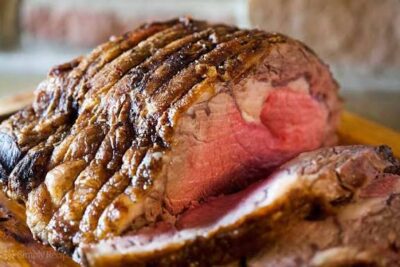
Prime rib (also called standing rib roast) is a large cut from the rib section of the beef. It’s well-marbled, which means:
Juicy, tender meat
Loads of flavour
A natural “wow” factor on the table
The size and price can make it feel intimidating—but honestly, this Delicious prime rib roast recipe you’ll love! comes down to three main things:
Good seasoning
The right oven temperature
A meat thermometer (your best friend here)
Get those right, and the oven does most of the work.
Choosing the Right Cut of Prime Rib
Before you even turn on the oven, let’s talk about what to buy.
Bone-In vs Boneless
You’ll commonly see:
Bone-in prime rib
Often labelled “standing rib roast”
Bones act as a natural roasting rack
Some say it adds more flavour and moisture
Boneless prime rib
Easier to carve
Takes a bit less time to cook
Both work for this Delicious prime rib roast recipe you’ll love!. If in doubt, bone-in is a classic choice.
How Much to Buy
A rough guide:
Bone-in: about 1 rib per 2 people (a 3-rib roast feeds 4–6, depending on appetites and side dishes).
Boneless: about ½–¾ lb (225–340 g) per person.
If you want leftovers (which you probably do), go toward the higher end.
What About “Prime” vs “Choice” vs “Select”?
In North America, “prime” is an actual grade of beef with more marbling, but:
A choice-grade rib roast can still be excellent.
The most important thing is visible marbling (fine white streaks of fat through the meat).
In the UK and Canada, you might see labels like “top quality roasting joint” or similar—ask the butcher for a well-marbled rib roast and you’ll be fine.
Ingredients for a Delicious Prime Rib Roast
Here’s a simple classic rub that lets the beef shine.
For the Roast
1 prime rib / standing rib roast (about 4–6 lb / 1.8–2.7 kg)
2–3 tbsp olive oil or softened butter
2–3 tsp coarse salt (kosher salt or sea salt)
2 tsp freshly ground black pepper
2 tsp garlic powder or 3–4 cloves fresh garlic, finely minced
2 tsp onion powder (optional but nice)
1–2 tsp dried thyme, rosemary, or a mix of both
Optional: 1 tsp smoked paprika for a deeper, slightly smoky flavour
For the Pan (Optional but Recommended)
1–2 cups (240–480 ml) beef stock or broth
1 small onion, cut into wedges
2–3 garlic cloves, lightly crushed
A few sprigs of fresh herbs (rosemary, thyme) if you have them
These extras help create delicious pan juices to serve with your Delicious prime rib roast recipe you’ll love!.
Step-by-Step: Delicious Prime Rib Roast Recipe You’ll Love!
This method uses a low-and-slow roast with a high-heat finish (reverse sear). It gives you more control and an evenly rosy interior.
1. Season the Roast Early
For best flavour:
Pat the roast dry with paper towels.
Rub it all over with olive oil or softened butter.
Mix salt, pepper, garlic, onion powder, herbs, and paprika in a small bowl.
Massage this mixture all over the roast, including the sides and the fat cap.
If you can, season it at least 12–24 hours ahead:
Place it on a tray or plate.
Loosely cover with plastic wrap or leave uncovered in the fridge (uncovered helps dry the surface and improve crust).
This “dry brine” lets the salt go deeper into the meat and enhances flavour.
2. Bring to Room Temperature
About 1–2 hours before cooking:
Take the roast out of the fridge and let it sit at room temperature.
This helps it cook more evenly. (Don’t leave it out all day—1–2 hours is enough.)
3. Preheat the Oven (Low Heat First)
Set your oven to:
250°F (120°C)
Place the onion wedges and garlic in the bottom of a roasting pan. Pour in about 1 cup of beef stock.
Set a roasting rack over the pan (or use carrot/celery sticks as a “rack” if you don’t have one).
Place the roast on the rack, fat side up.
Insert a meat thermometer into the thickest part of the roast, avoiding bone and large fat pockets.
4. Slow Roast to Almost Done
Roast at 250°F (120°C) until the internal temperature is:
115°F (46°C) for rare
120°F (49°C) for medium-rare
130°F (54°C) for medium
This can take anywhere from 1½ to 3 hours, depending on the size of your roast and your oven.
Don’t stress about the exact time—go by the thermometer, not the clock.
This is the heart of a Delicious prime rib roast recipe you’ll love!: cook to temperature, not time.
5. Rest While You Crank the Heat
Once it hits your target “almost done” temperature:
Remove the roast from the oven and tent loosely with foil.
Let it rest on the counter for 20–30 minutes.
While it rests:
Increase oven temperature to 500°F (260°C) or as high as your oven safely goes.
The roast will carryover cook a bit while resting, usually rising another 5–10°F (3–6°C).
6. High-Heat Blast for a Crust
When the oven is blazing hot:
Remove the foil from the roast.
Put the roast back in the oven for 5–10 minutes, just until the outside is browned and crisp.
Keep an eye on it so it doesn’t burn. This high-heat finish gives your Delicious prime rib roast recipe you’ll love! that restaurant-style crust.
7. Final Rest and Carving
Take the roast out again and rest for another 10–15 minutes before carving. This helps keep the juices inside the meat.
To carve:
If it’s bone-in, you can cut the bones away in one piece by slicing along them, then slice the boneless section into thick slices.
Aim for slices about ½–¾ inch (1–2 cm) thick.
Serve with the pan juices spooned over the top.
Making a Quick Pan Jus (Gravy’s Easier Cousin)
You don’t need a thick gravy—prime rib is great with a simple jus.
Place the roasting pan (with drippings, stock, onion, and garlic) over medium heat on the stove.
Add more stock if needed (up to another cup).
Simmer for 5–10 minutes, scraping up browned bits from the bottom.
Taste and adjust seasoning with salt and pepper.
Strain if you like a smooth jus, or leave the bits in for rustic style.
Pour into a jug and serve alongside your Delicious prime rib roast recipe you’ll love!.
Practical Tips for Prime Rib Success
Here are some extra tips to make this recipe foolproof:
1. Use a Thermometer, Always
Guessing is how roasts get overcooked. A digital probe thermometer you can leave in the meat while it cooks is ideal, but even an instant-read thermometer works—just check temperatures periodically.
2. Know Your Doneness Temperatures
After resting, your roast will roughly end up at:
125°F (52°C) – Rare
130–135°F (54–57°C) – Medium-rare (most popular)
140–145°F (60–63°C) – Medium
Prime rib is at its best around medium-rare. If you know some guests like theirs more well done, you can serve them end pieces, which tend to be more cooked.
3. Don’t Skip the Resting Time
Resting:
Lets juices redistribute, so they don’t all spill out when you cut.
Reduces the chance of dry meat.
It’s a key part of any Delicious prime rib roast recipe you’ll love!.
4. Season Generously
This is a big cut of meat; it needs bold seasoning. Don’t be shy with the salt and herbs, especially on the outer surface.
5. Serving Ideas
Prime rib pairs beautifully with:
Roasted or mashed potatoes
Yorkshire puddings (UK classic, but loved elsewhere too)
Green beans, Brussels sprouts, or roasted carrots
Horseradish sauce or a creamy mustard sauce
Leftovers are amazing in:
Roast beef sandwiches
Beef and veggie hash
Steak salads or wraps
Conclusion
A gorgeous, juicy prime rib doesn’t have to be stressful. With this Delicious prime rib roast recipe you’ll love!, you season the meat simply, cook it low and slow, finish with a hot blast for crust, and let your thermometer guide you to perfectly rosy slices.
Whether you’re hosting a holiday dinner in Canada, a Sunday roast in the UK, or a special celebration in the US, this standing rib roast brings big flavour and serious “wow” factor to the table—with surprisingly little hands-on time.