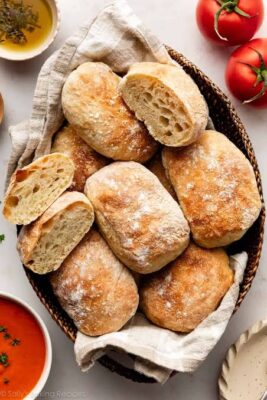
Few things are as comforting as the smell of freshly baked bread filling your kitchen. With its crisp crust, airy interior, and rustic Italian charm, ciabatta bread has become a favorite in homes across the United States, United Kingdom, and Canada. If you’ve ever thought ciabatta was too tricky to make at home, think again. This Delicious ciabatta bread recipe you’ll love! is designed to be approachable, reliable, and incredibly rewarding.
Ciabatta, which means “slipper” in Italian, is known for its flat shape and open crumb structure. While it looks like bakery magic, the secret lies in high hydration dough, patience, and proper handling. In this guide, you’ll learn not only how to make ciabatta bread step by step, but also why each step matters—so you can grow confident as a home baker.
Whether you want bread for sandwiches, dipping in olive oil, or serving alongside soups and pasta, this homemade ciabatta recipe will quickly become a staple in your kitchen.
What Makes Ciabatta Bread Special?
A Brief Look at Ciabatta’s Origins
Ciabatta bread originated in Italy in the 1980s as a response to the popularity of French baguettes. Italian bakers wanted a bread with a crisp crust and soft, hole-filled interior that worked beautifully for panini and sandwiches. Today, ciabatta is enjoyed worldwide for its versatility and rustic appeal.
Texture and Flavor Profile
What sets ciabatta apart from other breads is:
A light, airy crumb with large irregular holes
A thin, crisp crust
A mild, slightly nutty flavor enhanced by long fermentation
This Delicious ciabatta bread recipe you’ll love! delivers all of these qualities using simple ingredients and straightforward techniques.
Ingredients for a Delicious Ciabatta Bread Recipe
Basic Ingredients (Makes 2 Loaves)
4 cups (500 g) bread flour (or strong white flour)
1 ¾ cups (420 ml) warm water
2 teaspoons salt
2 teaspoons instant or active dry yeast
2 tablespoons olive oil (optional, but recommended)
Why bread flour?
Bread flour has a higher protein content, which helps develop gluten and gives ciabatta its signature structure. All-purpose flour can work, but bread flour yields better results.
Step-by-Step: How to Make Ciabatta Bread at Home
H2: Step 1 – Mixing the Dough
In a large bowl, combine the flour and yeast. Add warm water gradually while mixing with a spoon or your hands. The dough will be very sticky—this is normal and essential for ciabatta’s open crumb. Add salt and olive oil, then mix until fully incorporated.
Tip: Do not add extra flour to reduce stickiness. Ciabatta dough is meant to be wet.
H2: Step 2 – First Rise (Bulk Fermentation)
Cover the bowl with plastic wrap or a damp towel and let the dough rise at room temperature for 1½ to 2 hours, or until doubled in size.
For deeper flavor, you can let the dough rise slowly in the refrigerator for 12–18 hours. Long fermentation enhances taste and texture, making this Delicious ciabatta bread recipe you’ll love! even better.
H2: Step 3 – Stretch and Fold Technique
Instead of traditional kneading, ciabatta relies on gentle stretch-and-folds to build gluten.
Wet your hands
Gently stretch one side of the dough and fold it over itself
Rotate the bowl and repeat 3–4 times
Let the dough rest for 20–30 minutes and repeat this process twice more.
H2: Step 4 – Shaping the Ciabatta Loaves
Turn the dough out onto a well-floured surface. Handle gently to avoid deflating the air bubbles.
Divide the dough into two rectangles
Lightly shape without pressing down
Transfer to parchment paper
Dust lightly with flour, cover, and let rest for 30–45 minutes.
H2: Step 5 – Baking to Perfection
Preheat your oven to 450°F (230°C). Place a baking stone or inverted baking sheet inside to heat.
Just before baking:
Slide the parchment paper with dough onto the hot surface
Place a pan of hot water in the oven to create steam
Bake for 20–25 minutes until golden brown and hollow-sounding when tapped.
Practical Tips for Perfect Ciabatta Bread
Use Steam for a Better Crust
Steam during the first 10 minutes of baking helps create a crisp, blistered crust. This is a key detail in any authentic ciabatta bread recipe.
Embrace the Stickiness
High-hydration dough feels challenging at first, but it’s the reason this Delicious ciabatta bread recipe you’ll love! produces bakery-style results. Use wet hands and floured surfaces instead of adding extra flour.
Don’t Rush the Process
Ciabatta rewards patience. Longer fermentation equals better flavor, improved texture, and a more satisfying loaf.
Serving Ideas for Homemade Ciabatta
Ciabatta is incredibly versatile. Here are a few ways to enjoy it:
Sandwiches & Panini: Ideal for grilled vegetables, chicken, or Italian meats
Dipping Bread: Serve warm with olive oil, balsamic vinegar, or hummus
Garlic Bread: Slice, butter, and toast with garlic and herbs
Soup Companion: Perfect alongside tomato soup, minestrone, or chowder
Once you try this Delicious ciabatta bread recipe you’ll love!, store-bought versions may never satisfy again.
Common Mistakes to Avoid
Adding too much flour: Results in dense bread
Over-handling the dough: Deflates air pockets
Skipping steam: Leads to a dull, tough crust
Underbaking: Ciabatta should be deeply golden
Learning from these small missteps will help you master homemade ciabatta quickly.
Health and Nutrition Notes
Ciabatta bread is naturally low in fat and sugar. When made at home, you control the ingredients, making it a cleaner option than many commercial breads. Pair it with healthy fillings like grilled vegetables, lean proteins, and healthy fats for balanced meals.
Conclusion
Baking bread at home doesn’t have to be intimidating. With simple ingredients, patience, and the right techniques, you can create bakery-quality bread in your own kitchen. This Delicious ciabatta bread recipe you’ll love! proves that rustic Italian bread is achievable for home bakers of all skill levels.
From its crackly crust to its airy interior, ciabatta delivers comfort, flavor, and versatility in every bite. Whether you’re baking for family, friends, or yourself, this recipe is one you’ll return to again and again.