Dates have been treasured for thousands of years across the Middle East, North Africa, and many parts of Asia. Often called “nature’s candy” because of their caramel-like sweetness, dates are far more than a delicious snack—they’re nutrient-dense, energy-rich, and surprisingly versatile. For many cultures, dates are considered a complete food, rich enough in nutrients to sustain people during long journeys or periods with limited resources.
If you’ve ever wondered why dates are so highly valued, or what makes them a “complete” source of nourishment, this guide breaks it all down.
What Does “A Complete Food” Mean?
When people call dates a complete food, they don’t mean dates replace every nutrient your body needs forever. Instead, it means:
They contain many essential nutrients in meaningful amounts.
They offer quick and lasting energy.
They provide a balance of natural sugars, fibre, vitamins, and minerals.
They can serve as a primary energy source in situations where food variety is limited.
For centuries, travellers, farmers, and nomadic groups relied on dates for sustained energy in harsh desert environments—an impressive real-life test of their nourishing power.
Nutritional Benefits of Dates
Dates are small but surprisingly dense in nutrients. Here’s what they offer:
1. Natural Energy Boost
Dates are rich in natural sugars:
Glucose
Fructose
Sucrose
These sugars absorb quickly, giving an instant energy lift, while their fibre helps sustain that energy longer. This combination makes dates ideal for:
Pre-workout fuel
Afternoon pick-me-ups
Long hikes or outdoor activities
2. High Fibre Content
A serving of dates provides a significant amount of dietary fibre, which supports:
Digestive health
Gut regularity
Blood sugar balance
Feeling full longer
This makes dates a great alternative to processed sugary snacks.
3. Important Vitamins
Dates contain:
Vitamin B6 – supports brain function and metabolism
Vitamin K – supports bone and blood health
Niacin (B3) and Riboflavin (B2) – help convert food to energy
While not a multivitamin replacement, the variety of micronutrients adds to their “complete food” reputation.
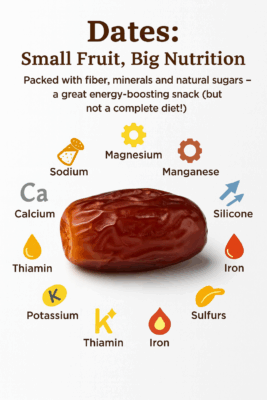
4. Minerals for Strength and Stamina
Dates are naturally rich in minerals essential for daily wellness:
Potassium – supports heart and muscle function
Magnesium – helps with nerves, muscles, and sleep
Copper and Manganese – support bone health and metabolism
Iron – important for oxygen transport and energy
This mineral profile is one reason dates were historically used to prevent fatigue and malnourishment.
5. Antioxidants
Dates contain several antioxidants, including:
Flavonoids – linked to anti-inflammatory benefits
Carotenoids – support eye and skin health
Phenolic acids – associated with heart protection
These compounds help the body manage everyday oxidative stress.
Why Many Cultures Call Dates a “Complete Food”
1. Sustenance in Harsh Climates
In desert environments, fresh food wasn’t always available. Dates provided:
Long-lasting calories
Natural sugars for energy
Minerals for hydration
Fibre for digestion
They could be eaten alone or combined with nuts, milk, or bread for full meals.
2. Shelf Stability
Dates keep well for long periods without refrigeration. Even in the US, UK, and Canada, they store beautifully in airtight containers.
3. Versatility in Meals
Dates can be eaten:
Fresh
Dried
Stuffed
Blended into drinks
Added to savoury dishes
Mixed into breads, bars, and desserts
You can use dates in smoothies, energy bites, oatmeal, salads, sandwiches, and more.
4. Complementary Nutrition with Other Foods
Pouring milk over dates, pairing them with nuts, or eating them alongside yogurt turns them into even more balanced meals. Many traditional cultures served dates with:
Almonds
Walnuts
Goat milk
Yogurt
Soft cheeses
These combinations provide protein, healthy fats, and extra nutrients.
Types of Dates You’ll Find in the US, UK, and Canada
Common varieties include:
Medjool Dates
Soft, large, caramel-like
Great for snacking and desserts
Deglet Noor Dates
Firmer, drier, mildly sweet
Excellent for baking
Barhi Dates
Soft and creamy when fully ripe
Halawi & Zahidi Dates
Slightly drier with more nutty flavour
All varieties offer the same basic nutritional benefits—they just differ in texture and sweetness.
How to Use Dates in Everyday Meals
Dates are incredibly adaptable. Try adding them to:
Breakfast
Oatmeal or porridge
Smoothies
Yogurt bowls
Breakfast bars
Snacks
Stuffed with almond butter
Wrapped in bacon (for special occasions)
Mixed into homemade trail mix
Energy bites with oats and nuts
Lunch & Dinner
Chopped into grain salads
Added to couscous, quinoa, or rice dishes
Blended into sauces for natural sweetness
Used in slow-cooked stews
Desserts
Date caramel (blended dates + water)
Sticky toffee pudding
Raw “no-bake” balls and bars
Natural sweetener in cakes or muffins
Dates are naturally sweet, so you often don’t need to add sugar to recipes that use them.
Practical Tips for Buying and Storing Dates
To get the best from your dates:
Buying Tips
Look for plump, glossy skin
Avoid overly dry, shrivelled dates
Organic options are available but not required
Storage
Store in an airtight container
Keep at room temperature for 1–3 months
Refrigerate for longer storage
Freeze for up to a year
Proper storage keeps them soft and moist.
Are Dates Too High in Sugar?
Dates are naturally sweet, but their sugars come packaged with fibre, vitamins, and antioxidants—unlike refined sugar. Fibre helps slow down sugar absorption. As with all foods, moderation matters, especially if you’re managing blood sugar, but for most people, dates are a wholesome, nutrient-rich alternative to processed sweets.
Conclusion
Dates truly earn their reputation as a complete food thanks to their nutrient density, natural sweetness, energy-boosting properties, and incredible versatility. Whether you enjoy them as quick snacks, blend them into smoothies, add them to savoury dishes, or use them in baking, dates offer a delicious, wholesome way to nourish your body.
From Middle Eastern traditions to modern health trends in the US, UK, and Canada, dates continue to be celebrated as one of nature’s most convenient and complete foods.