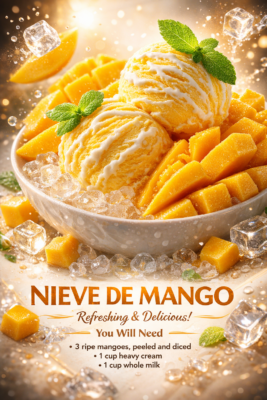
When warm weather calls for something cool, fruity, and refreshing, Nieve de Mango answers perfectly. This vibrant frozen dessert, known for its intense mango flavor and light, icy texture, has long been a favorite in Latin American cuisine and is now winning hearts across North America and Europe. Made primarily from ripe mangoes, water, and a touch of sweetener, Nieve de Mango celebrates simplicity while delivering bold tropical taste.
Often described as mango ice, mango sorbet, or traditional Mexican nieve, this dessert stands out for being naturally dairy-free and refreshingly light. Whether enjoyed on a sunny afternoon, served as a palate cleanser, or prepared at home as a healthier alternative to ice cream, Nieve de Mango offers a delicious balance of sweetness and freshness.
This article explores the origins, ingredients, preparation methods, variations, and practical tips for enjoying Nieve de Mango, helping you understand why it has become a global favorite.
What Is Nieve de Mango?
Understanding the Concept of “Nieve”
In Spanish, nieve means “snow,” a fitting name for a dessert with a light, icy consistency. Culinary nieves are frozen treats made with fruit, water, and sugar, similar to sorbet but traditionally lighter and less dense.
Nieve de Mango is a mango-based version of this classic dessert, focusing on the pure flavor of ripe mangoes without the richness of dairy or cream.
Nieve de Mango vs. Mango Sorbet
Although the terms are often used interchangeably, there are subtle differences:
Nieve de Mango usually has a lighter, more crystalline texture
Mango sorbet is often smoother and more concentrated
Nieve tends to use fewer ingredients and less sugar
Traditional nieve emphasizes freshness over richness
These qualities make Nieve de Mango especially appealing to those seeking a refreshing, fruit-forward dessert.
The Cultural Origins of Nieve de Mango
Roots in Mexican and Latin American Traditions
Nieve de Mango has deep roots in Mexican food culture, where street vendors have sold fruit-based nieves for generations. Originally made by hand using ice, salt, and metal containers, these desserts were a way to preserve fruit and provide relief from the heat.
Mango quickly became a popular flavor due to its natural sweetness, bright color, and abundance in tropical climates.
Growing Popularity in the US, UK, and Canada
In recent years, Nieve de Mango has gained widespread attention in English-speaking countries due to:
Rising interest in global and authentic cuisines
Demand for vegan and dairy-free desserts
Popularity of mango in smoothies, drinks, and sweets
Today, it’s common to find mango nieve in Mexican restaurants, specialty ice shops, and home kitchens.
Key Ingredients That Define Authentic Nieve de Mango
Mango: The Heart of the Dessert
The quality of mangoes directly impacts the flavor of Nieve de Mango. Popular varieties include:
Ataulfo (Honey Mango): Sweet, smooth, and low in fiber
Kent and Keitt Mangoes: Widely available and juicy
Haden Mangoes: Bold flavor and vibrant color
Fully ripe mangoes provide natural sweetness and reduce the need for added sugar.
Supporting Ingredients
Traditional Nieve de Mango recipes typically include:
Water or fruit juice
Sugar, agave syrup, or honey
Fresh lime or lemon juice for balance
Some modern interpretations add chili powder, ginger, or herbs for a creative twist.
How Nieve de Mango Is Made
Traditional Preparation Methods
Historically, nieve was made by continuously stirring a fruit mixture as it froze in an ice-and-salt bath. This process created small ice crystals, resulting in a soft, scoopable texture.
Modern Home Preparation
Today, making Nieve de Mango at home is much easier. Common methods include:
Blending mangoes and freezing with periodic stirring
Using a food processor with frozen mango chunks
Preparing the mixture in an ice cream maker
Regardless of the method, the goal is to preserve the fresh mango flavor while achieving a light, refreshing texture.
Flavor Variations and Creative Twists
Popular Variations of Nieve de Mango
Nieve de Mango is incredibly versatile and pairs well with other flavors:
Mango Lime Nieve: Bright and tangy
Spicy Mango Nieve: With chili powder or Tajín
Mango Coconut Ice: Tropical and aromatic
Mango Pineapple Nieve: Extra juicy and sweet
These variations allow the dessert to adapt to different tastes and occasions.
Serving Ideas and Toppings
Nieve de Mango can be served simply or dressed up with:
Fresh mango cubes
Chamoy or chili sauce
Mint leaves
Waffle cones or fruit shells
It works equally well as a casual snack or a visually appealing dessert.
Health Benefits of Nieve de Mango
A Naturally Lighter Dessert Option
Because it contains no dairy or heavy fats, Nieve de Mango is often:
Lower in calories than ice cream
Suitable for vegan and lactose-intolerant diets
Easier to digest
Nutritional Value of Mango
Mangoes are rich in:
Vitamin C for immune support
Vitamin A for skin and eye health
Antioxidants that help combat oxidative stress
When enjoyed in moderation, Nieve de Mango can be both satisfying and nourishing.
Practical Tips for Making the Best Nieve de Mango
Selecting the Best Mangoes
Choose mangoes that are fragrant and slightly soft
Avoid underripe fruit, which can taste sour
Deep yellow or orange flesh indicates ripeness
Achieving the Ideal Texture
Blend mangoes until completely smooth
Strain if necessary to remove fibers
Stir the mixture during freezing to reduce ice crystals
Balancing Sweetness and Acidity
Taste before adding sweetener—ripe mangoes are naturally sweet
Use lime or lemon juice to enhance flavor
Avoid over-sweetening to keep the dessert refreshing
Storage Recommendations
Store in an airtight container
Cover the surface with parchment paper
Consume within one to two weeks for best quality
Why Nieve de Mango Appeals to Global Audiences
For readers in the United States, United Kingdom, and Canada, Nieve de Mango offers:
Familiar ingredients with an exotic twist
Compatibility with modern dietary preferences
A refreshing alternative to heavy desserts
A connection to authentic culinary traditions
Its simplicity makes it accessible, while its flavor keeps it exciting.
Conclusion
Nieve de Mango is a timeless frozen dessert that perfectly balances freshness, simplicity, and bold tropical flavor. Rooted in Latin American tradition and embraced by global audiences, it continues to grow in popularity as people seek lighter, fruit-based treats.
Whether you enjoy it as a refreshing summer indulgence, a dairy-free dessert option, or a creative base for new flavor combinations, Nieve de Mango proves that great desserts don’t need to be complicated. With ripe mangoes, balanced sweetness, and thoughtful preparation, this icy classic delivers pure enjoyment in every spoonful.
As interest in global flavors and healthier desserts continues to rise, Nieve de Mango remains a delicious reminder that sometimes the simplest recipes are the most unforgettable. 🥭🍨
When warm weather calls for something cool, fruity, and refreshing, Nieve de Mango answers perfectly. This vibrant frozen dessert, known for its intense mango flavor and light, icy texture, has long been a favorite in Latin American cuisine and is now winning hearts across North America and Europe. Made primarily from ripe mangoes, water, and a touch of sweetener, Nieve de Mango celebrates simplicity while delivering bold tropical taste.
Often described as mango ice, mango sorbet, or traditional Mexican nieve, this dessert stands out for being naturally dairy-free and refreshingly light. Whether enjoyed on a sunny afternoon, served as a palate cleanser, or prepared at home as a healthier alternative to ice cream, Nieve de Mango offers a delicious balance of sweetness and freshness.
This article explores the origins, ingredients, preparation methods, variations, and practical tips for enjoying Nieve de Mango, helping you understand why it has become a global favorite.
What Is Nieve de Mango?
Understanding the Concept of “Nieve”
In Spanish, nieve means “snow,” a fitting name for a dessert with a light, icy consistency. Culinary nieves are frozen treats made with fruit, water, and sugar, similar to sorbet but traditionally lighter and less dense.
Nieve de Mango is a mango-based version of this classic dessert, focusing on the pure flavor of ripe mangoes without the richness of dairy or cream.
Nieve de Mango vs. Mango Sorbet
Although the terms are often used interchangeably, there are subtle differences:
Nieve de Mango usually has a lighter, more crystalline texture
Mango sorbet is often smoother and more concentrated
Nieve tends to use fewer ingredients and less sugar
Traditional nieve emphasizes freshness over richness
These qualities make Nieve de Mango especially appealing to those seeking a refreshing, fruit-forward dessert.
The Cultural Origins of Nieve de Mango
Roots in Mexican and Latin American Traditions
Nieve de Mango has deep roots in Mexican food culture, where street vendors have sold fruit-based nieves for generations. Originally made by hand using ice, salt, and metal containers, these desserts were a way to preserve fruit and provide relief from the heat.
Mango quickly became a popular flavor due to its natural sweetness, bright color, and abundance in tropical climates.
Growing Popularity in the US, UK, and Canada
In recent years, Nieve de Mango has gained widespread attention in English-speaking countries due to:
Rising interest in global and authentic cuisines
Demand for vegan and dairy-free desserts
Popularity of mango in smoothies, drinks, and sweets
Today, it’s common to find mango nieve in Mexican restaurants, specialty ice shops, and home kitchens.
Key Ingredients That Define Authentic Nieve de Mango
Mango: The Heart of the Dessert
The quality of mangoes directly impacts the flavor of Nieve de Mango. Popular varieties include:
Ataulfo (Honey Mango): Sweet, smooth, and low in fiber
Kent and Keitt Mangoes: Widely available and juicy
Haden Mangoes: Bold flavor and vibrant color
Fully ripe mangoes provide natural sweetness and reduce the need for added sugar.
Supporting Ingredients
Traditional Nieve de Mango recipes typically include:
Water or fruit juice
Sugar, agave syrup, or honey
Fresh lime or lemon juice for balance
Some modern interpretations add chili powder, ginger, or herbs for a creative twist.
How Nieve de Mango Is Made
Traditional Preparation Methods
Historically, nieve was made by continuously stirring a fruit mixture as it froze in an ice-and-salt bath. This process created small ice crystals, resulting in a soft, scoopable texture.
Modern Home Preparation
Today, making Nieve de Mango at home is much easier. Common methods include:
Blending mangoes and freezing with periodic stirring
Using a food processor with frozen mango chunks
Preparing the mixture in an ice cream maker
Regardless of the method, the goal is to preserve the fresh mango flavor while achieving a light, refreshing texture.
Flavor Variations and Creative Twists
Popular Variations of Nieve de Mango
Nieve de Mango is incredibly versatile and pairs well with other flavors:
Mango Lime Nieve: Bright and tangy
Spicy Mango Nieve: With chili powder or Tajín
Mango Coconut Ice: Tropical and aromatic
Mango Pineapple Nieve: Extra juicy and sweet
These variations allow the dessert to adapt to different tastes and occasions.
Serving Ideas and Toppings
Nieve de Mango can be served simply or dressed up with:
Fresh mango cubes
Chamoy or chili sauce
Mint leaves
Waffle cones or fruit shells
It works equally well as a casual snack or a visually appealing dessert.
Health Benefits of Nieve de Mango
A Naturally Lighter Dessert Option
Because it contains no dairy or heavy fats, Nieve de Mango is often:
Lower in calories than ice cream
Suitable for vegan and lactose-intolerant diets
Easier to digest
Nutritional Value of Mango
Mangoes are rich in:
Vitamin C for immune support
Vitamin A for skin and eye health
Antioxidants that help combat oxidative stress
When enjoyed in moderation, Nieve de Mango can be both satisfying and nourishing.
Practical Tips for Making the Best Nieve de Mango
Selecting the Best Mangoes
Choose mangoes that are fragrant and slightly soft
Avoid underripe fruit, which can taste sour
Deep yellow or orange flesh indicates ripeness
Achieving the Ideal Texture
Blend mangoes until completely smooth
Strain if necessary to remove fibers
Stir the mixture during freezing to reduce ice crystals
Balancing Sweetness and Acidity
Taste before adding sweetener—ripe mangoes are naturally sweet
Use lime or lemon juice to enhance flavor
Avoid over-sweetening to keep the dessert refreshing
Storage Recommendations
Store in an airtight container
Cover the surface with parchment paper
Consume within one to two weeks for best quality
Why Nieve de Mango Appeals to Global Audiences
For readers in the United States, United Kingdom, and Canada, Nieve de Mango offers:
Familiar ingredients with an exotic twist
Compatibility with modern dietary preferences
A refreshing alternative to heavy desserts
A connection to authentic culinary traditions
Its simplicity makes it accessible, while its flavor keeps it exciting.
Conclusion
Nieve de Mango is a timeless frozen dessert that perfectly balances freshness, simplicity, and bold tropical flavor. Rooted in Latin American tradition and embraced by global audiences, it continues to grow in popularity as people seek lighter, fruit-based treats.
Whether you enjoy it as a refreshing summer indulgence, a dairy-free dessert option, or a creative base for new flavor combinations, Nieve de Mango proves that great desserts don’t need to be complicated. With ripe mangoes, balanced sweetness, and thoughtful preparation, this icy classic delivers pure enjoyment in every spoonful.
As interest in global flavors and healthier desserts continues to rise, Nieve de Mango remains a delicious reminder that sometimes the simplest recipes are the most unforgettable. 🥭🍨