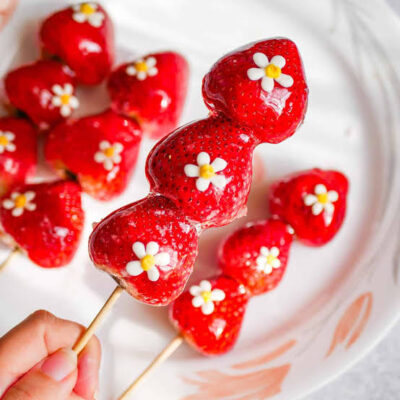
Tanghulu (often called Chinese candied fruit or sugar-coated fruit skewers) is a traditional street snack from Northern China. It’s usually made with hawthorn berries, but at home it’s often made with:
Strawberries
Grapes
Mandarin orange segments
Blueberries
Pineapple chunks
The defining feature of tanghulu is its thin, glassy sugar shell. When you bite into it, you get a loud crack, followed by the juicy fruit inside. Our goal with this Perfect Tanghulu Recipe at Home is to get that perfect balance of crunch and freshness—without a sticky, stringy mess.
Ingredients and Equipment You’ll Need
Basic Ingredients
For about 10–12 skewers:
2–3 cups fresh fruit (strawberries, seedless grapes, blueberries, etc.)
2 cups granulated sugar
1 cup water
Optional: 1–2 tablespoons corn syrup (helps make the coating more stable and glossy)
Tip: Use firm, fresh, dry fruit. Overripe or wet fruit will ruin the sugar coating.
Equipment
Wooden skewers
Medium saucepan
Candy thermometer (very helpful, but not strictly required)
Parchment paper or a silicone baking mat
Large plate or tray
Bowl of ice water for testing the sugar
Step-by-Step: Perfect Tanghulu Recipe at Home
1. Prep the Fruit Properly
This step is critical for success.
Wash your fruit thoroughly.
Pat it completely dry with paper towels.
If using strawberries, remove the green tops only if you’re okay with an exposed core; otherwise leave them on for looks.
Thread 3–4 pieces of fruit onto each skewer (or fewer for big strawberries).
Any moisture left on the fruit can make the sugar seize or slide off, so be patient with drying.
2. Set Up Your Workspace
Before you cook the sugar:
Line a tray with parchment paper or a silicone mat.
Place your prepared skewers nearby.
Fill a small bowl with ice water (for testing the sugar stage if you don’t have a thermometer).
When making tanghulu at home, things happen quickly once the sugar is ready, so having everything set up in advance is a huge help.
3. Make the Sugar Syrup
In a medium saucepan:
Add 2 cups sugar and 1 cup water.
Optionally add 1–2 tablespoons corn syrup to improve shine and reduce crystallization.
Heat over medium-high heat without stirring once the sugar dissolves (stirring can sometimes make it crystallize).
You’re aiming for a hard-crack stage syrup—this is what gives tanghulu its signature crunch.
If using a candy thermometer: Heat the mixture to about 300°F / 150°C.
If you don’t have a thermometer: Drop a tiny bit of syrup into the bowl of ice water. If it hardens instantly and breaks with a snap (like glass), you’ve reached the right stage.
Important: The sugar will be extremely hot. Don’t touch it and keep your face and hands at a safe distance from any splatter.
4. Dip and Coat the Fruit
Once the syrup reaches hard-crack stage:
Turn the heat to low, just to keep the sugar from cooling too fast.
Quickly tilt the pot slightly to pool the syrup on one side.
Holding the skewer by the handle end, dip and roll the fruit in the syrup to coat it evenly.
Lift the skewer and let excess syrup drip off for a moment.
Place the coated skewer on the prepared parchment or silicone mat to set.
Repeat with all your skewers. If the syrup thickens too much as you go, gently reheat it for a moment—but be careful not to let it burn.
Within a couple of minutes, the sugar shell will harden into that iconic tanghulu crunch.
How to Know If Your Tanghulu Is “Perfect”
A Perfect Tanghulu Recipe at Home should give you:
A clear, glass-like sugar shell (not cloudy or grainy)
A loud crack when you bite into it
Fruit that’s still juicy inside
A coating that doesn’t slide off or puddle on the parchment
If your tanghulu turns sticky, soft, stringy, or cloudy, check out the troubleshooting tips below.
Troubleshooting Common Tanghulu Problems
1. The Sugar Coating Is Sticky or Chewy
Likely cause: The sugar syrup didn’t reach hard-crack stage.
Fix:
Next time, cook the syrup a bit longer, or check the temperature with a thermometer.
Use the ice water test if you’re unsure: the sugar should harden and break cleanly.
2. The Sugar Crystallizes in the Pan
Likely cause: Stirring too much or sugar crystals on the sides of the pan.
Fix:
Don’t stir once the sugar has dissolved.
You can brush the sides of the pan with a little water using a pastry brush to dissolve any stray crystals.
Adding a bit of corn syrup can also help stabilize the mixture.
3. The Coating Slides Off the Fruit
Likely cause: Fruit was wet or too juicy on the surface.
Fix:
Make absolutely sure your fruit is completely dry before dipping.
Pat it multiple times with paper towels.
Avoid very soft, overripe fruit.
4. The Coating Is Too Thick
Likely cause: Dipping too slowly or letting too much sugar cling to the fruit.
Fix:
Work quickly and let excess syrup drip off before setting the skewer down.
Consider slightly tilting the pan to create a shallow pool; this gives more control.
Variations to Try With Your Perfect Tanghulu Recipe at Home
Once you’ve nailed the basic method, you can have fun customizing:
Fruit Combinations
Strawberry & grape mix on the same skewer
Pineapple chunks for a tropical twist
Blueberries and blackberries for mini, bite-sized tanghulu
Flavored Sugar
While traditional tanghulu uses plain sugar, you can add:
A few drops of vanilla extract (added off the heat so it doesn’t burn)
A tiny pinch of cinnamon or ginger for warmth
Decor Ideas
Work quickly before the sugar fully hardens and:
Sprinkle on crushed nuts (for older teens/adults, and only if there are no allergies)
Add a tiny pinch of edible glitter or sparkling sugar for parties
Use different fruits on each skewer for a rainbow effect
Just remember: anything you add must go on before the coating sets, which only takes a minute or two.
Practical Tips for Tanghulu Success
Here are some extra tips to help your Perfect Tanghulu Recipe at Home turn out amazing every time:
1. Work in Small Batches
Sugar cools fast. It’s easier to manage:
10–12 skewers at a time
2 cups sugar + 1 cup water per batch
Trying to coat too many skewers with one batch may lead to thick, clumpy sugar.
2. Don’t Refrigerate for Long
Tanghulu is best eaten right away or within a couple of hours. Refrigerating for a short time (10–15 minutes) can help if your kitchen is warm, but:
Long refrigeration can cause moisture to form and make the sugar sticky.
3. Safety First
Caramelized sugar is very hot—hotter than boiling water.
Keep young kids away from the cooking area.
Don’t lick the spoon or touch the syrup.
If sugar spills on the stove or counter, let it cool completely before cleaning it up.
4. Using Leftover Sugar
Don’t pour leftover sugar syrup down the sink—it can harden and clog drains.
Instead:
Pour it carefully onto parchment paper, let it harden, and then throw it away.
5. Choose the Right Day
Tanghulu doesn’t always love very humid conditions. On super humid or rainy days, the sugar coating can get sticky more quickly. If possible, make it on a drier day, or be ready to eat it soon after making.
Serving Ideas for Tanghulu
Tanghulu is perfect for:
Movie nights at home
Birthday parties
Festive holidays like Lunar New Year or New Year’s Eve
Sleepovers or weekend treats
Arrange the skewers in a tall glass or jar so they stand upright, showing off the glossy fruit. It looks impressive but is surprisingly simple once you know the method.
Conclusion: You Can Absolutely Make Tanghulu at Home
With a bit of practice and attention to detail, you can master the Perfect Tanghulu Recipe at Home and impress friends and family with a crunchy, shiny dessert that looks straight out of a street-food video.
Remember the key points:
Dry fruit completely
Cook sugar to hard-crack stage (around 300°F / 150°C)
Work quickly and carefully when dipping
Enjoy your tanghulu soon after making it
Once you’ve got the basics down, experiment with different fruits, decorations, and flavor twists. Whether you’re in the United States, the United Kingdom, or Canada, this Chinese-style candied fruit is a fun, eye-catching treat that’s surprisingly doable in your own kitchen.