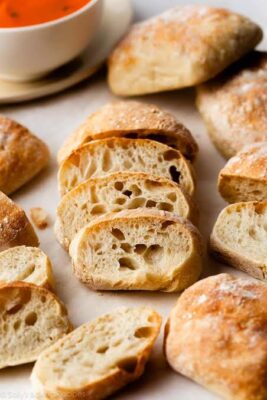
Ciabatta may look rustic and impressive, but it’s surprisingly simple to make. The secret is a wet dough, a long fermentation time, and gentle handling. This guide walks you through every step so you can bake delicious ciabatta with confidence.
⭐ Ingredients
This recipe makes two medium ciabatta loaves.
For the Poolish (Starter)
1 cup (120 g) all-purpose or bread flour
1 cup (240 ml) water (room temperature)
¼ teaspoon instant yeast
For the Main Dough
All of the poolish
2 cups (240 g) bread flour
¾ cup (180 ml) warm water
1 teaspoon instant yeast
1½ teaspoons salt
1 tablespoon olive oil (optional, but helps flavor)
🌾 Step-by-Step Instructions
Step 1: Make the Poolish (Starter)
This simple starter boosts flavor and improves texture.
Combine flour, water, and yeast in a bowl.
Stir until no dry flour remains.
Cover with plastic wrap or a towel.
Let rest 12–16 hours at room temperature.
Ready when:
It’s bubbly on top
Smells slightly sweet and yeasty
Has doubled in size
This is the foundation of great ciabatta.
Step 2: Mix the Main Dough
In a large bowl:
Add the poolish.
Pour in warm water, yeast, olive oil, and salt.
Stir to dissolve the poolish.
Add the flour and mix until a sticky dough forms.
Don’t knead yet. Ciabatta dough is very wet—this is normal!
Step 3: Knead Using Stretch-and-Fold Method
Traditional kneading doesn’t work well with wet dough. Instead, use stretch and folds:
Wet your hands (prevents sticking).
Grab a corner of the dough, stretch it up, then fold it over.
Turn the bowl and repeat 4–6 times.
Cover and rest for 30 minutes.
Repeat this stretch-and-fold routine 3–4 times.
Each round strengthens the dough and builds structure for those big airy holes.
Step 4: First Rise (Bulk Fermentation)
After your stretch-and-fold sets:
Cover the bowl.
Let it rise for 1–2 hours until doubled and jiggly.
If your kitchen is cold, it may take longer.
If it rises too fast, refrigerate it for 10–15 minutes.
Step 5: Shape the Ciabatta
Ciabatta requires gentle shaping—don’t punch down the dough.
Dust your work surface generously with flour.
Carefully pour the dough out—don’t tear it.
Using floured hands or a scraper, divide into two rectangles.
Stretch each piece slightly into a longer slipper shape (“ciabatta” means slipper!).
Do not roll or knead them.
The rustic shape is part of the charm.
Place each loaf onto a well-floured parchment sheet or baking cloth (couche).
Step 6: Second Rise
Let the shaped loaves rest for:
30–45 minutes
They should puff slightly but not double.
Step 7: Preheat the Oven
Ciabatta loves high heat.
Preheat to 475°F (245°C)
Place a baking stone or upside-down sheet pan in the oven
Put a tray at the bottom for steam
Step 8: Bake Your Ciabatta
Slide the loaves (on parchment) onto your hot stone or tray.
Pour a cup of hot water onto the bottom tray to create steam (this makes the crust crispy).
Bake 20–25 minutes until the crust is golden brown.
Cool for at least 20 minutes before slicing—this helps set the crumb structure.
Your homemade ciabatta is ready!
🍞 What Makes Ciabatta Special?
Crackling crust
Big airy holes
Soft, chewy interior
Mildly tangy, fermented flavor
Perfect for dipping, toasting, or sandwiches
Once you master this Step-by-Step Ciabatta Bread Recipe Guide, you’ll bake this rustic loaf again and again.
⭐ Practical Tips for Ciabatta Success
✔ Use bread flour
Higher protein = stronger structure and bigger holes.
✔ Avoid adding extra flour
Wet dough = airy bread.
Resist the urge to make it less sticky.
✔ Use wet hands and a bench scraper
This makes handling sticky dough much easier.
✔ Don’t over-handle
The less you disturb the air pockets, the better the crumb.
✔ Bake with steam
Steam helps the dough expand before the crust sets.
✔ Let the starter fully develop
A bubbly, ripe poolish = maximum flavor.
💡 Variations to Try
Olive Ciabatta
Fold in chopped black olives during the last stretch-and-fold.
Garlic & Herb Ciabatta
Add minced garlic + rosemary to the dough.
Whole Wheat Ciabatta
Replace 20–25% of the bread flour with whole wheat.
Ciabatta Rolls (Mini Slippers)
Divide dough into 6–8 portions instead of 2.
🥪 Serving Ideas
Ciabatta is incredibly versatile. Try it with:
Olive oil + balsamic dip
Sandwiches (grilled veggies, cheese, chicken)
Bruschetta
Breakfast egg sandwiches
Soup and stew sides
Garlic bread
It toasts beautifully and stays soft inside.
🧊 Storage & Freezing
Room Temperature
Store in a paper bag for 1 day
For longer storage, wrap in plastic or put in a bread box
Freezing
Slice and freeze up to 3 months
Reheat in the oven to restore crispness
🎉 Conclusion
This Step-by-Step Ciabatta Bread Recipe Guide gives you everything you need to make authentic, bakery-quality ciabatta at home. With a long fermentation, gentle handling, and a hot oven, you’ll get a loaf that’s airy, chewy, and deeply flavorful.
Homemade ciabatta may sound fancy, but it’s absolutely beginner-friendly—and incredibly rewarding.