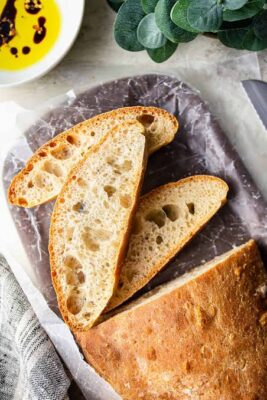
Few things are as comforting as the smell of freshly baked bread filling your kitchen. Among the many bread varieties loved worldwide, ciabatta holds a special place. With its crisp crust, open crumb, and chewy texture, this Italian classic is perfect for sandwiches, dipping in olive oil, or enjoying on its own.
The good news? You don’t have to be a professional baker to achieve perfection. With patience and practice, you can master the art of ciabatta bread recipe today! This guide will walk you through the process step by step, from mixing the dough to achieving that signature airy interior.
H2: What Is Ciabatta Bread?
Origin: First created in Italy in the 1980s as a rustic alternative to the French baguette.
Texture: Characterized by a crisp crust and a soft, hole-filled interior.
Flavor: Mild, slightly tangy, with a chewy bite.
Uses: Ideal for sandwiches (like panini), soups, or as a side with pasta and salads.
H2: Ingredients for Ciabatta
Here’s what you’ll need:
500g (about 4 cups) bread flour
475ml (2 cups) water, lukewarm
10g (2 tsp) salt
7g (2 tsp) sugar
2 tsp instant yeast (or active dry yeast)
2 tbsp olive oil (optional, for softer texture)
Optional Starter (Biga)
For more flavor, prepare a biga (Italian pre-ferment):
250g (2 cups) flour
175ml (¾ cup) water
1/8 tsp yeast
Let it ferment overnight before mixing into the main dough.
H2: Step-by-Step Ciabatta Recipe
H3: 1. Mix the Dough
If using a biga, combine it with the flour, water, yeast, sugar, and salt.
Stir until you get a sticky dough (ciabatta dough is very wet compared to other breads).
H3: 2. First Rise
Cover the bowl with plastic wrap or a damp towel.
Let the dough rest for 1–2 hours at room temperature until doubled in size.
H3: 3. Stretch and Fold Technique
Instead of kneading, perform 3–4 sets of “stretch and fold” every 30 minutes.
This strengthens gluten while keeping the airy structure.
H3: 4. Shape the Ciabatta
Generously flour your surface.
Gently tip the dough out, being careful not to deflate it.
Divide into two rectangular loaves.
Place on a parchment-lined tray.
H3: 5. Second Rise
Cover loosely and let rise for another 45 minutes.
H3: 6. Bake to Perfection
Preheat oven to 220°C / 425°F with a baking stone or tray inside.
Add a pan of hot water at the bottom of the oven to create steam.
Bake loaves for 20–25 minutes until golden brown and hollow-sounding when tapped.
H2: Tips for Perfect Ciabatta
Embrace the Wet Dough – Don’t add too much flour; the sticky dough creates the airy crumb.
Use Steam – Essential for a crisp, crackly crust.
Patience Pays Off – Longer fermentation = better flavor.
Flour Generously – Prevents sticking while shaping.
Cool Before Slicing – Cutting too early squashes the airy structure.
H2: Variations to Try
Whole Wheat Ciabatta: Replace part of the flour with whole wheat for a nuttier flavor.
Herb Ciabatta: Add rosemary, thyme, or oregano to the dough.
Olive Ciabatta: Mix in sliced black or green olives before shaping.
Cheese Ciabatta: Sprinkle parmesan or asiago cheese for a rich twist.
H2: Serving Ideas
Classic Dip: Tear pieces and dip in extra virgin olive oil with balsamic vinegar.
Panini Sandwiches: Layer with mozzarella, tomato, and basil, then grill.
Soup Companion: Pair with minestrone, tomato soup, or creamy chowders.
Breakfast Toast: Top with avocado, eggs, or butter and jam.
H2: Why Bake Ciabatta at Home?
Fresher, healthier, and free from preservatives.
More affordable than bakery loaves.
Customizable with herbs, grains, or fillings.
A rewarding skill for bread lovers to master.
Conclusion
Ciabatta bread may look rustic and artisanal, but with the right method, anyone can bake it at home. By following the steps in this guide and practicing patience, you’ll soon enjoy bakery-quality loaves with a crisp crust and soft, airy interior.
So don’t wait—master the art of ciabatta bread recipe today! Once you’ve tried it, this Italian favorite will become a staple in your kitchen, perfect for everything from sandwiches to soups. 🍞✨