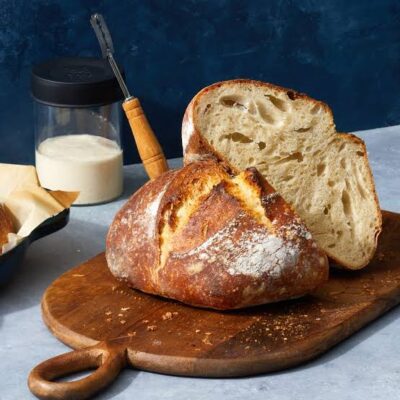
There’s something magical about baking bread at home—the aroma, the crust, the chewy center. And at the heart of it all lies the sourdough starter. This simple mixture of flour and water, left to ferment naturally, becomes a living culture that gives sourdough bread its tangy flavor and airy texture.
If you’ve ever thought sourdough baking was complicated, think again. In this guide, we’ll walk you through a quick & delicious sourdough starter recipe you must try, complete with tips to help you succeed from day one.
🌟 Why Make Your Own Sourdough Starter?
No commercial yeast needed: It harnesses wild yeast from the air and flour.
Healthier bread: Naturally fermented bread is easier to digest.
Flavorful results: That signature tangy taste and chewy crumb.
Endless baking options: Bread, pancakes, waffles, pizza dough, and more.
🥄 Ingredients You’ll Need
The beauty of a sourdough starter is its simplicity—just two ingredients:
Flour: All-purpose or whole wheat (whole wheat tends to ferment faster).
Water: Filtered or dechlorinated water works best.
Optional: A clean glass jar and a kitchen scale for accurate measurements.
🍴 Step-by-Step Sourdough Starter Recipe
Day 1: Mix
In a clean jar, combine 100 g flour + 100 g water.
Stir well until no dry flour remains.
Cover loosely with a cloth or lid (not airtight).
Day 2: Check and Feed
You may see a few bubbles, or maybe nothing yet—that’s okay.
Discard half the mixture.
Add another 100 g flour + 100 g water and stir.
Day 3–5: Continue Feeding
Each day, discard half and feed with equal parts flour and water.
By Day 3, you should start noticing bubbles and a tangy smell.
By Day 5, the starter should double in size within 6–8 hours after feeding.
Day 6–7: Ready to Use
When the starter consistently doubles and has a pleasant, slightly sour aroma, it’s ready for baking.
💡 Pro Tips for Success
Consistency matters: Keep feedings at the same ratio daily.
Warm environment: Starters thrive at 70–75°F (21–24°C).
Use whole wheat flour early: It boosts fermentation.
Float test: Drop a spoonful of starter in water—if it floats, it’s active.
Don’t worry about hooch: A layer of liquid on top means it’s hungry—just stir it in or pour it off before feeding.
🍞 How to Use Your Starter
Once active, your sourdough starter can be used in countless recipes:
Classic sourdough bread
Rustic pizza crust
Fluffy pancakes
Crispy waffles
Homemade crackers
🧊 Storage and Maintenance
Daily use: Keep at room temperature and feed every 24 hours.
Occasional use: Store in the refrigerator and feed once a week.
To revive: Take it out, discard half, feed, and let it sit at room temperature until bubbly again.
Conclusion
Creating your own starter isn’t just about baking bread—it’s about starting a tradition in your kitchen. With this quick & delicious sourdough starter recipe you must try, you’ll have a reliable base for endless homemade creations.
So, grab some flour, add water, and let nature do the rest. Before you know it, you’ll be baking golden loaves with a tangy flavor and chewy crust that rival any bakery. 🍞✨