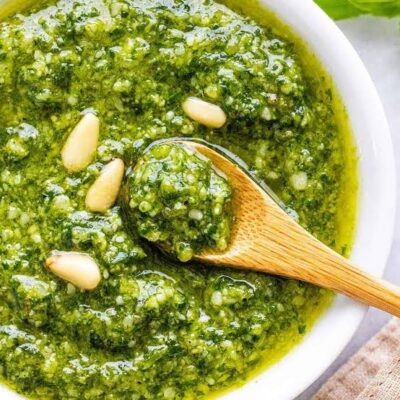
Few sauces can elevate a dish as effortlessly as fresh basil pesto. Bursting with bright herbal notes, nutty undertones, and a touch of garlic, pesto has earned its place as a kitchen essential. Whether you’re spreading it on sandwiches, tossing it with pasta, or using it as a marinade, this green gem can take your meals from simple to spectacular.
In this guide, you’ll learn how to transform your cooking with this basil pesto recipe recipe! We’ll explore its origins, walk through step-by-step instructions, share tips for success, and suggest creative ways to use it beyond pasta.
🌱 What Is Basil Pesto?
Originating in Genoa, Italy, pesto (pesto alla genovese) is a raw sauce traditionally made by grinding basil, garlic, pine nuts, Parmesan cheese, and olive oil in a mortar and pestle. The word pesto comes from the Italian pestare, meaning “to pound.”
Today, pesto is enjoyed worldwide for its versatility and bold, fresh flavor.
🥄 Essential Ingredients for Basil Pesto
To make classic basil pesto, you’ll need:
Fresh basil leaves: Sweet, fragrant, and the star of the show.
Garlic: Adds depth and a savory kick.
Pine nuts: Traditional choice, though other nuts work well too.
Parmesan cheese: Nutty and salty for balance.
Extra virgin olive oil: Brings everything together into a smooth sauce.
Salt & pepper: To taste.
Optional swaps: Walnuts, almonds, or cashews instead of pine nuts; Pecorino Romano instead of Parmesan.
🍴 Step-by-Step: How to Make Basil Pesto
Step 1: Prepare the Ingredients
Wash and dry basil leaves thoroughly.
Peel garlic cloves.
Step 2: Blend or Crush
Traditional method: Use a mortar and pestle to grind garlic and nuts, then add basil, cheese, and olive oil gradually.
Modern method: Combine garlic, nuts, and basil in a food processor. Pulse until chopped, then stream in olive oil. Stir in cheese at the end.
Step 3: Adjust and Store
Taste and season with salt and pepper.
Store in a jar with a thin layer of olive oil on top to prevent browning.
🌟 Tips for the Best Basil Pesto
Use young, fresh basil leaves for the sweetest flavor.
Toast the nuts lightly to bring out their nuttiness.
Add cheese last if blending—this keeps the texture creamy instead of gummy.
If the pesto is too thick, add a splash of pasta water or more olive oil.
To keep it bright green, blanch basil leaves in boiling water for 5 seconds, then shock in ice water before blending.
🍝 Creative Ways to Use Basil Pesto
Pasta: The classic—toss with spaghetti, penne, or gnocchi.
Sandwich spread: Swap mayo for pesto on paninis or wraps.
Pizza base: Use instead of tomato sauce for a fresh twist.
Marinade: Coat chicken, fish, or shrimp before grilling.
Salad dressing: Whisk into vinaigrettes for extra flavor.
Vegetables: Drizzle over roasted potatoes, zucchini, or asparagus.
Eggs: Swirl into scrambled eggs or omelets.
🥡 Storage and Freezing Tips
Refrigerate: Store in an airtight jar with a drizzle of olive oil on top for up to 5 days.
Freeze: Spoon into ice cube trays, freeze, then transfer cubes to a freezer bag for up to 3 months. Perfect for single servings!
Conclusion
It’s easy to see why people love pesto—it’s fresh, versatile, and endlessly delicious. With just a handful of ingredients and a few minutes, you can transform your cooking with this basil pesto recipe recipe! Whether you’re tossing it with pasta or adding a dollop to soups, sandwiches, and more, basil pesto is a culinary shortcut to amazing flavor.
So grab a bunch of fresh basil and get blending—your kitchen (and taste buds) will thank you. 🌿🍝✨